gtmpod

B2B marketing therapy

Paste an AI GTM vendor claim. See what it actually means.

ROI calculators are fake-precise. Claim translation shows the assumptions your RevOps team may eventually inherit.

Not a procurement audit. Not legal advice. Just a brutally useful translation of public vendor hype into GTM operating reality.

URL reading can fail on heavy JavaScript pages. If that happens, switch to Paste copy.

Anonymous users get 3 translations per day.

Badge gallery

Every AI GTM page gets a personality problem

The joke is the wrapper. The useful part is learning which operational risk pattern is hiding under the claim.

The GTM Claim Autopsy Framework

Fake-serious framework, real operating questions

Evidence model

Does the page show proof or just vibes?

Workflow model

What changes in the actual GTM motion?

Data model

What inputs must exist and be clean?

Human review model

Where does autonomy stop?

Revenue model

What conversion math is implied?

RevOps model

What cleanup, routing, or governance gets inherited?

Sample teardown

Start with a known offender

AI SDR / outbound

11x Alice
11x Alice logo
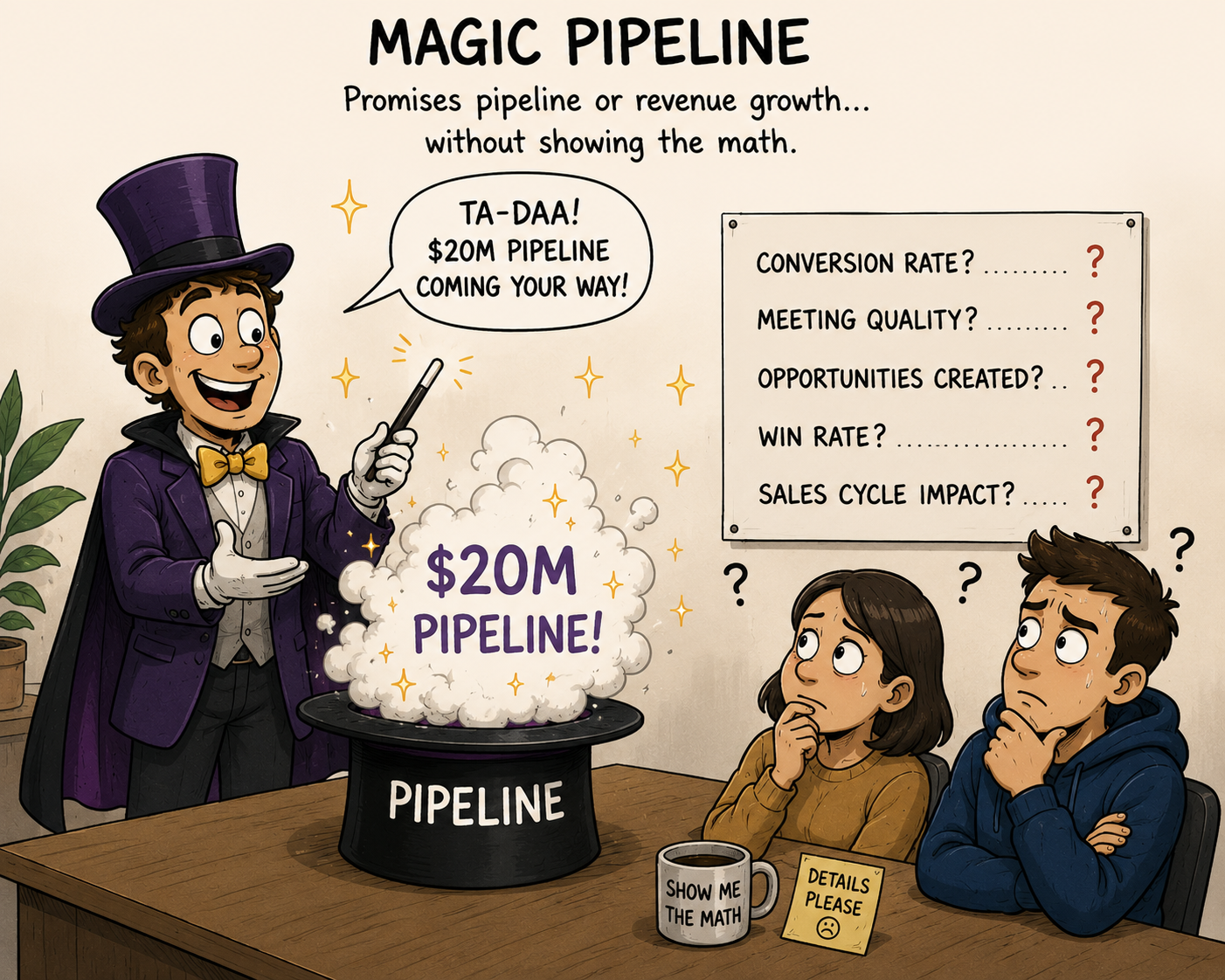
Magic Pipeline
Six stacked assumptions in a trenchcoat, walking into your forecast call and asking for quota credit.

Alice promises an autonomous SDR worker, but the page leaves AE acceptance, deliverability, and CRM hygiene to the buyer to figure out.

Hidden assumptions

Your ICP is specific enough for the system to identify the right buyers. · Public and third-party data are rich enough to infer buyer pain.
Robot CostumeRevOps Tax
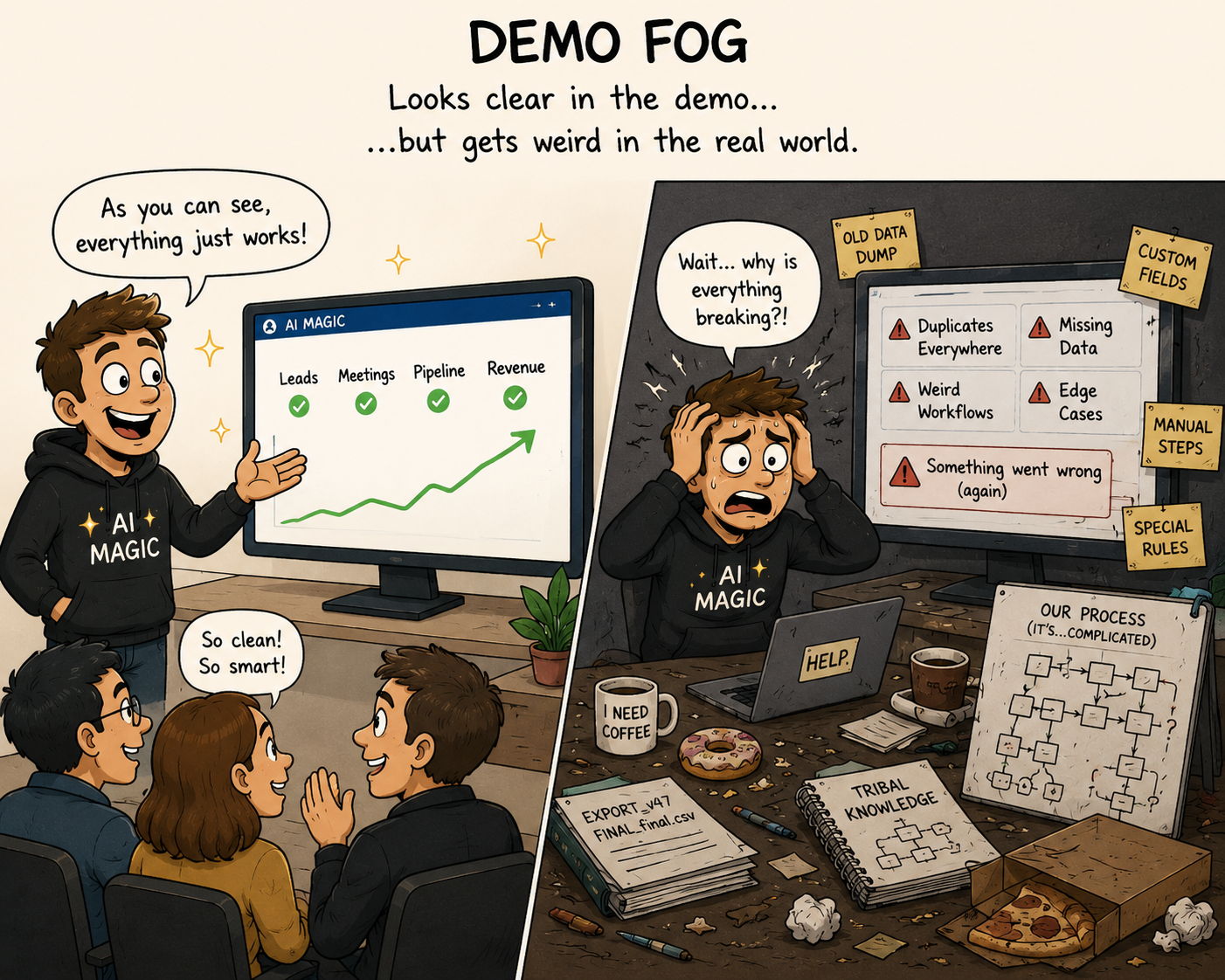
Demo Fog
Three autonomous agents, one heroic admin, zero mentions of who owns the rollback ticket.

Agentforce is autonomous in the demo and configuration-heavy in production — every action depends on object permissions, validation rules, and routing logic the page never shows.

Hidden assumptions

Your Salesforce object permissions and sharing rules are clean enough for an agent to act safely. · There is an owner who reviews and rolls back agent writebacks.

RevOps TaxRobot Costume

Marketing ops

6sense Revenue AI
6sense logo
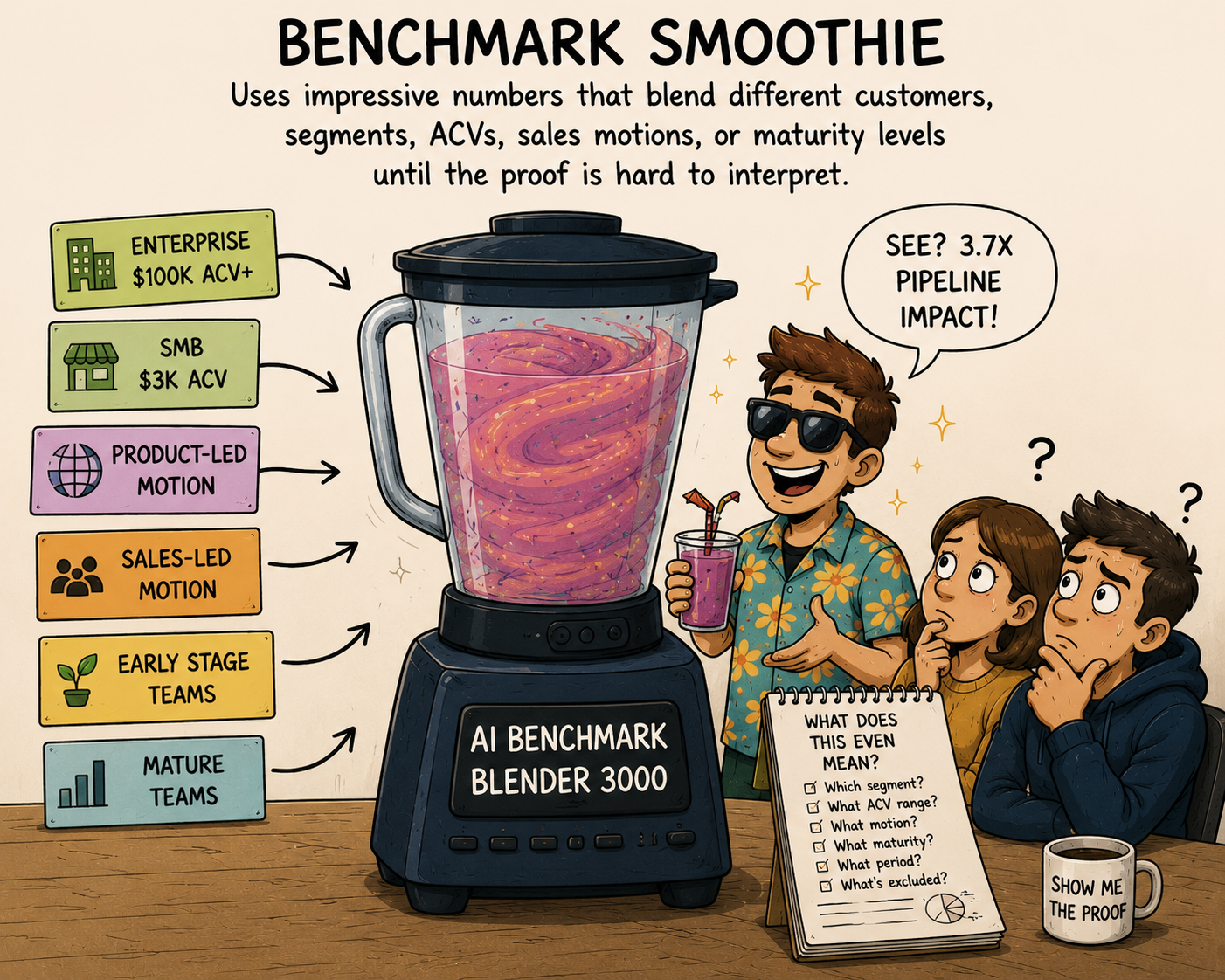
Benchmark Smoothie
Aggregate uplift numbers everywhere; the per-account confidence interval is conveniently off-screen.

6sense ranks accounts using third-party intent plus a predictive model — useful, as long as you trust signals you can't audit and a score nobody outside the platform can recompute.

Hidden assumptions

Third-party intent maps cleanly to your buying committees. · Deanonymized account matches are accurate enough to act on.

Magic PipelineInsight Shelfware
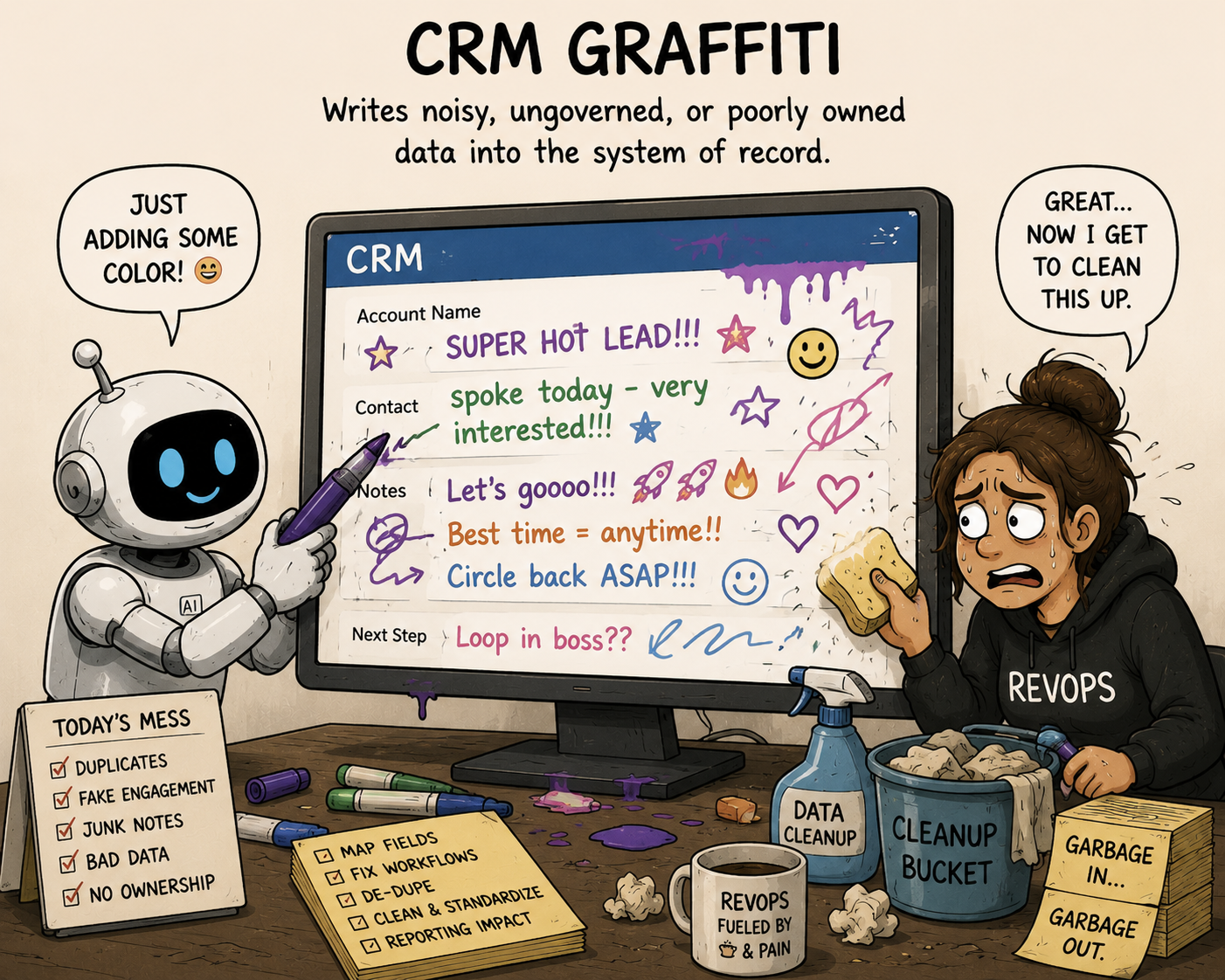
CRM Graffiti
Autonomous outreach into a CRM whose owner clauses still say 'TBD'.

The agent generates and logs sequenced touches into Salesforce; the buyer inherits the cleanup, attribution, and dedupe questions that come with it.

Hidden assumptions

Research depth is high enough to clear AE bullshit detectors. · Personalization survives at sequence-level scale, not just demo-level.

Robot CostumeMagic Pipeline

Forecasting / deal risk

Gong Forecast
Gong logo
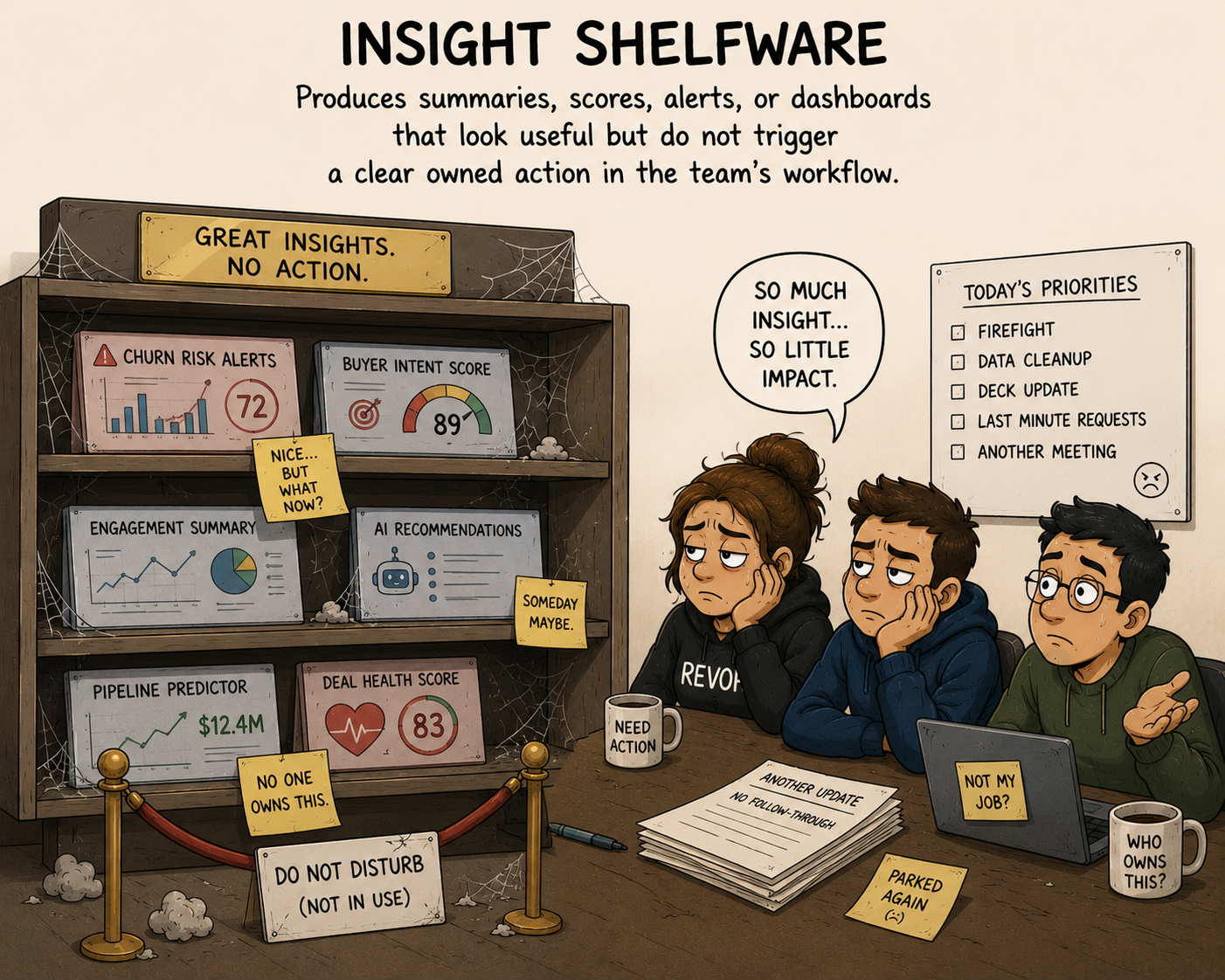
Insight Shelfware
Forecast accuracy goes up when humans look at the screen — a load-bearing assumption nobody is testing.

Forecast surfaces deal-risk patterns from conversations and CRM events; the value only lands if a manager actually changes inspection behavior because of them.

Hidden assumptions

Call recording coverage is high enough across deals. · Stage definitions are consistent across teams.

Demo FogBenchmark Smoothie

Forecasting / deal risk

Clari RevAI
Clari logo
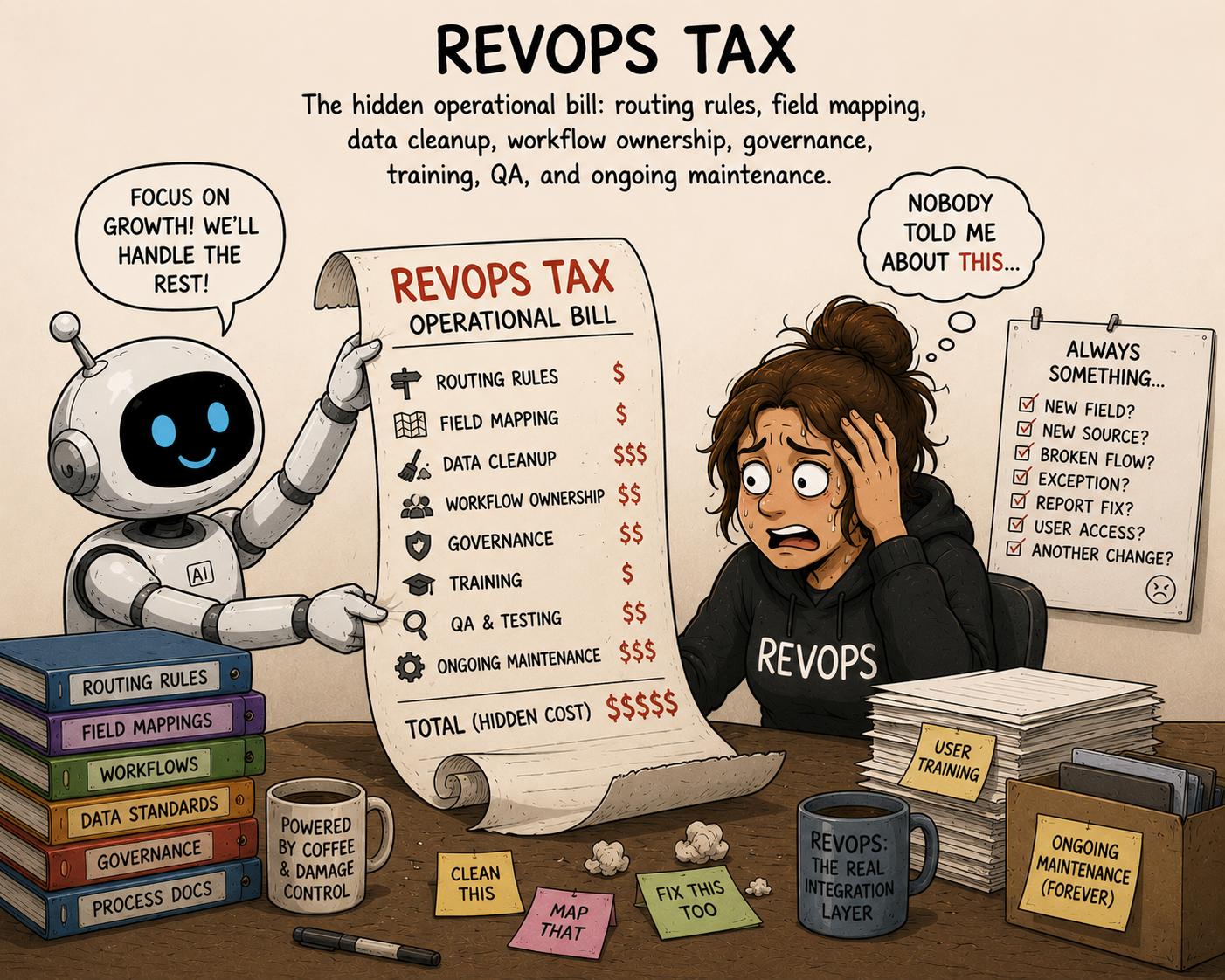
RevOps Tax
One platform replaces three tools and adds two consulting engagements you didn't budget for.

RevAI consolidates forecasting, deal inspection, and execution — but only after a buyer rebuilds their forecast model, fields, and routing logic inside Clari's framework.

Hidden assumptions

Existing forecast logic is documented well enough to migrate. · RevOps owns the migration and has bandwidth.

Stack JengaDemo Fog

Methodology

How we grade vendor scorecards

Every public claim translation earns a main badge from one of eight risk patterns. The grade starts from the assumption that all marketing contains some hype, then applies modest penalties for operational risks such as CRM writeback, missing pipeline math, hidden setup work, and tool consolidation risk.

Repeated severe patterns matter more than one-off hype. A single Robot Costume or Demo Fog badge is normal vendor marketing; several Magic Pipeline, CRM Graffiti, or Stack Jenga verdicts across multiple pages are what push a score down. Grades span A- through D and only unlock once a vendor has at least 3 public verdicts.

Source pages are captured the day they're translated. We link the original URL on every verdict so anyone can check the receipts and challenge a call. If a vendor updates the page, submit it again and the next verdict reflects the new copy.